
 Get Directions
This hike traverses an interesting area of Harriman State Park which is little used because of the difficulty of access. There is no good way to incorporate the section of the Suffern-Bear Mountain Trail used by this hike into a loop, so this hike will require two cars, with one car left at each end of the hike. The first part of the hike involves climbing over five hills, with a total...
Hike Description:
This hike traverses an interesting area of Harriman State Park which is little used because of the difficulty of access. There is no good way to incorporate the section of the Suffern-Bear Mountain Trail used by this hike into a loop, so this hike will require two cars, with one car left at each end of the hike. The first part of the hike involves climbing over five hills, with a total elevation gain of over 1,400 feet (although the end of the hike is an easy walk on a nearly-level woods road). Some of the climbs involve rock scrambles, and this is one of the most challenging hikes in Harriman State Park. Do not attempt this hike if the ground is wet or covered with snow or ice.
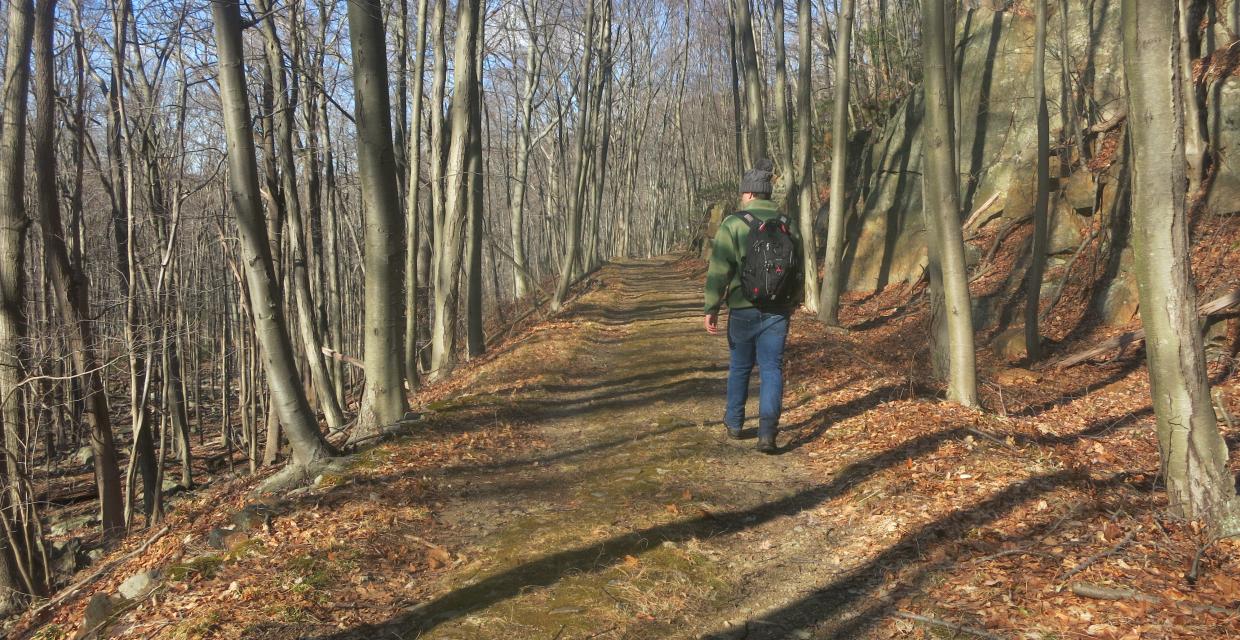
From the parking area, head west on Route 106 for a short distance, then cross the road just before the bridge over the stream. At a break in the guardrail, you’ll see the yellow blazes of the Suffern-Bear Mountain (S-BM) Trail heading north from the road. Follow the S-BM Trail as it enters the woods and continues along a woods road. After the road curves to the left, you’ll reach a fork where the S-BM Trail bears right onto another woods road. A short distance ahead, the trail bears left and begins a rather steep climb.
At the top of the climb, the trail reaches a huge glacial erratic boulder known as the Irish Potato. You’ll want to take a break here and explore this interesting feature. The trail turns right and soon begins to descend.
After descending for about a third of a mile, you’ll reach a rock outcrop to the right of the trail, with Upper Pound Swamp (which is actually a pond) visible beyond. Here, the trail turns left and continues to descend through dense thickets of mountain laurel. It turns right onto a woods road, then turns left, leaving the road, and begins to climb Pound Swamp Mountain.
Before reaching the summit of the mountain, the S-BM Trail turns left and begins to descend. For part of the way down, it follows an old woods road. Near the base of the descent, the trail follows a route along the side of a hill parallel to Tiorati Brook below, which features attractive cascades when the water is high. It reaches the paved Lake Welch Drive just east of the road bridge over the brook.
The trail turns right and follows the road (which is closed to traffic in the winter), then bears left at a fork and crosses an overpass that spans the southbound lanes of the Palisades Interstate Parkway. Upon reaching the northbound lanes of the Parkway, the trail turns sharply left, runs along the Parkway for about 100 feet, then crosses the highway (use extreme caution) and begins the steep, rocky climb up Pingyp Mountain.
This climb is one of the steepest in the entire park, and in some places, you will need to use your hands as well as your feet. After climbing a vertical distance of about 250 feet in only about 0.15 mile, you’ll reach a rock ledge, with pitch pines, that offers an excellent east-facing view over the Hudson River. This is a good spot to stop and rest from the arduous climb.
A short distance beyond, you’ll notice a small plaque attached to a rock to the right of the trail. The plaque was erected in 1930 in memory of Harold B. Scutt, who scouted this section of the S-BM Trail in 1925 (Scutt was killed in a plane crash in Attica, New York in 1930). After climbing another steep ledge and reaching a viewpoint to the north and west, the trail bends sharply to the right, and the grade moderates.
You’ll soon encounter another challenging spot, where the trail climbs steeply through a crevice in the rock. After climbing some more, you’ll reach another viewpoint to the south and east over the Hudson River, with Hook Mountain jutting into the river in the distance. The trail now bears left and continues to climb.
Just below the summit of Pingyp Mountain (1,023 feet), you’ll come to another south-facing viewpoint. On a clear day, the New York City skyline is visible on the horizon. The summit itself, however, does not afford any views.
The first part of the descent from the Pingyp is moderate, but the descent steepens about halfway down, where the trail turns left onto a woods road. At the base of the descent, the trail briefly turns right onto another woods road (known as the Pines Trail). In 300 feet, it turns left, leaving the woods road. It crosses a stream, passes a stone fireplace, and begins a steady climb to the summit of The Pines (a misnomer – there is not a single pine tree on this hill!). Just beyond the summit, there are good views to the north from a rock ledge.
After descending from The Pines through thickets of mountain laurel, the S-BM Trail turns left onto a woods road – the route of the 1779 and Red Cross Trails – and immediately crosses a stream. In 400 feet, it turns right, descends a little, then steeply climbs an unnamed hill. The trail descends gradually and, after crossing a stream, reaches Beechy Bottom East Road (marked as a bike trail).
The S-BM Trail now steeply climbs to the top of Horn Hill. This is your last climb of the day; from here on, the route will be either downhill or level. When you reach the base of the gradual descent, turn left onto the bike trail (leaving the S-BM Trail) and turn left again at the next intersection, continuing to follow the bike trail. Then, at the following intersection, turn right. You are now heading north along the historic Beechy Bottom East Road, improved by workers of the Civilian Conservation Corps in 1934.
Proceed ahead on this level road, with bike trail markers, for 1.6 miles. In a quarter mile, the red-on-white-blazed Ramapo-Dunderberg Trail crosses (note the stone steps on either side of the road), and the white-blazed Appalachian Trail crosses a short distance beyond. When you reach a T-intersection of woods roads in 1.2 miles, turn right, then bear left just ahead, continuing to follow the bike trail markers. At the next intersection of woods roads, bear left and follow the bike trail and the white-blazed Anthony Wayne Trail downhill, proceeding ahead at a four-way intersection and bearing left at a T-intersection. Soon, you’ll reach the entrance road to the Anthony Wayne Recreation Area, where you parked your first car.
Publication: Submitted by Daniel Chazin on 12/15/2006 updated/verified on 03/02/2017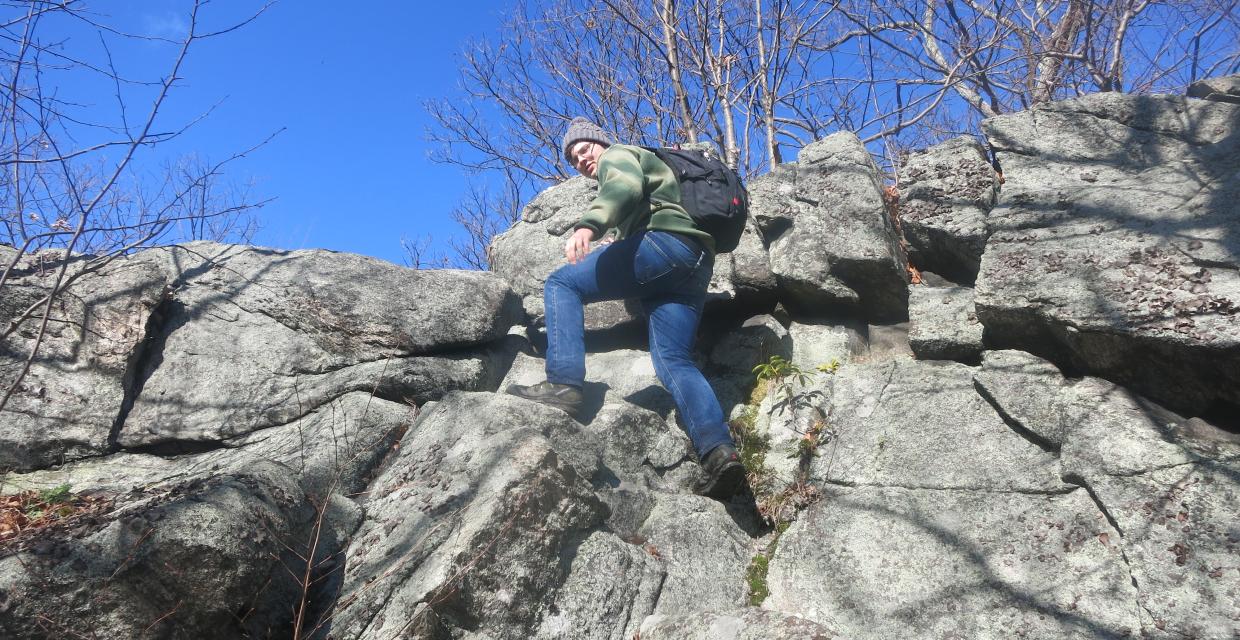
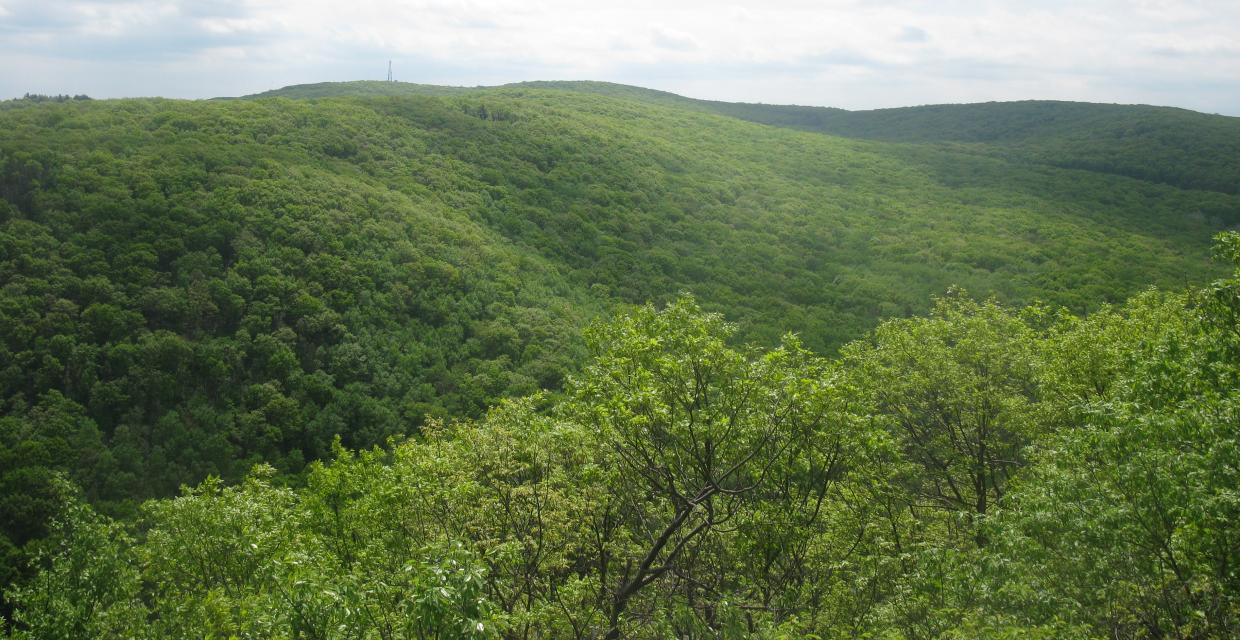
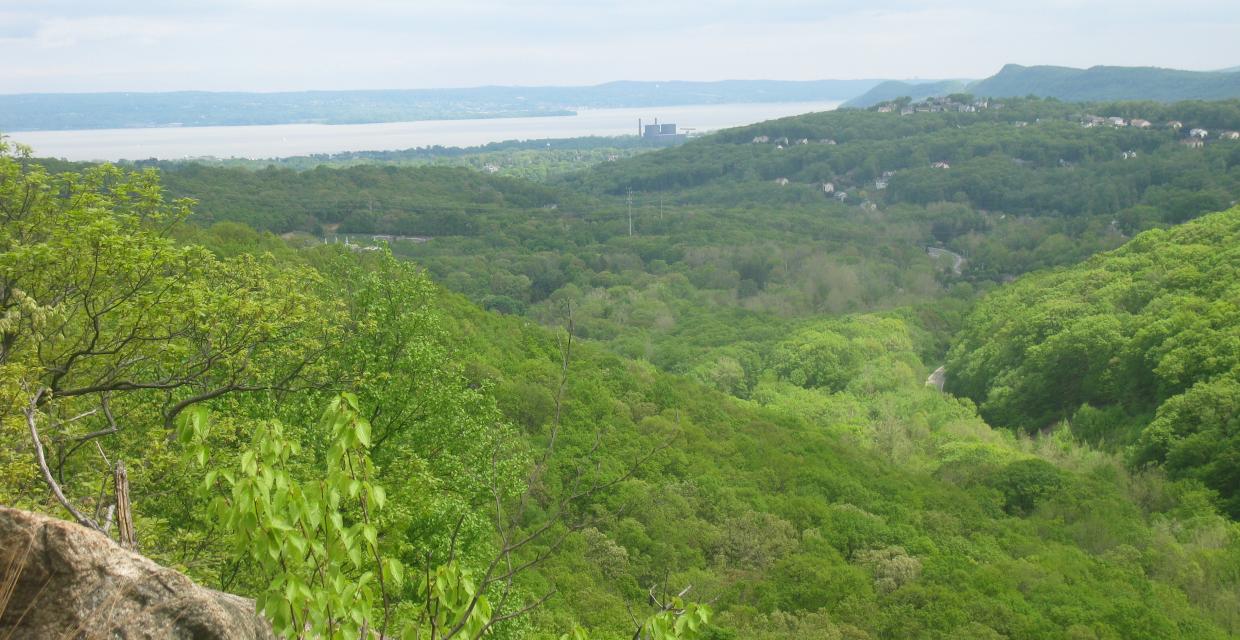
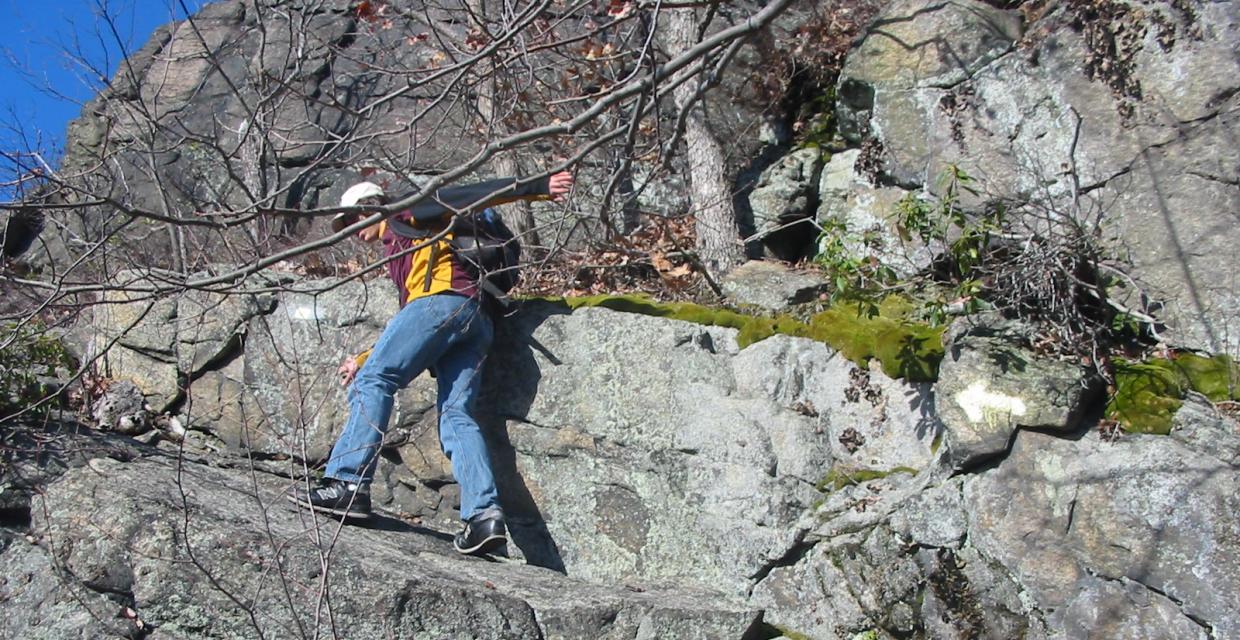
This one-way hike climbs steeply over several hills, including Pyngyp Mountain, with panoramic views.
41.297598, -74.027274
Rockland Co., NY
8 mi
5.5 hrs

Buy Book: Circuit Hikes in Harriman
Avenza App Map: Harriman-Bear Mountain 119
Hike Checklist:
Whether you are going for a day hike or backpacking overnight, it is good practice to carry what we call The Hiking Essentials. These essentials will help you enjoy your outing more and will provide basic safety gear if needed. There may also be more essentials, depending on the season and your needs.
The Essentials
Hiking Shoes or Boots
Water - Two quarts per person is recommended in every season. Keep in mind that fluid loss is heightened in winter as well as summer. Don't put yourself in the position of having to end your hike early because you have run out of water.
Map - Know where you are and where you are going. Many of our hiking areas feature interconnecting network of trails. Use a waterproof/tear-resistant Tyvek Trail Conference map if available or enclose your map in a Ziplock plastic bag. If you have a mobile device, download Avenza’s free PDF Maps app and grab some GPS-enhanced Trail Conference maps (a backup Tyvek or paper version of the map is good to have just in case your batteries die or you don't have service). Check out some map-reading basics here.
Food - Snacks/lunch will keep you going as you burn energy walking or climbing. Nuts, seeds, and chocolate are favorites on the trail.
Sunscreen and insect repellent
Rain Gear and Extra Clothing - Rain happens. So does cold. Be prepared for changing weather. Avoid cotton--it traps water against your skin and is slow to dry. If you are wearing wet cotton and must return to your starting point, you risk getting chills that may lead to a dangerous hypothermia. Choose synthetic shirts, sweaters and/or vests and dress in layers for easy on and off.
Compass - A simple compass is all you need to orient you and your map to magnetic north.
Light - A flashlight or small, lightweight headlamp will be welcome gear if you find yourself still on the trail when darkness falls. Check the batteries before you start out and have extras in your pack.
First Aid Kit - Keep it simple, compact, and weatherproof. Know how to use the basic components.
Firestarter and Matches - In an emergency, you may need to keep yourself or someone else warm until help arrives. A firestarter (this could be as simple as leftover birthday candles that are kept inside a waterproof container) and matches (again, make sure to keep them in a waterproof container) could save a life.
Knife or Multi-tool - You may need to cut a piece of moleskin to put over a blister, repair a piece of broken equipment, or solve some other unexpected problem.
Emergency Numbers - Know the emergency numbers for the area you're going to and realize that in many locations--especially mountainous ones, your phone will not get reception.
Common Sense - Pay attention to your environment, your energy, and the condition of your companions. Has the weather turned rainy? Is daylight fading? Did you drink all your water? Did your companion fail to bring rain gear? Are you getting tired? Keep in mind that until you turn around you are (typically) only half-way to completing your hike--you must still get back to where you started from! (Exceptions are loop hikes.)
Check the weather forecast before you head out. Know the rules and regulations of the area.
The Leave No Trace Seven Principles
Plan Ahead and Prepare
- Know the regulations and special concerns for the area you'll visit.
- Prepare for extreme weather, hazards, and emergencies.
- Schedule your trip to avoid times of high use.
- Visit in small groups when possible. Consider splitting larger groups into smaller groups.
- Repackage food to minimize waste.
- Use a map and compass to eliminate the use of marking paint, rock cairns or flagging.
Travel and Camp on Durable Surfaces
- Durable surfaces include established trails and campsites, rock, gravel, dry grasses or snow.
- Protect riparian areas by camping at least 200 feet from lakes and streams.
- Good campsites are found, not made. Altering a site is not necessary.
- In popular areas:
- Concentrate use on existing trails and campsites.
- Walk single file in the middle of the trail, even when wet or muddy.
- Keep campsites small. Focus activity in areas where vegetation is absent.
- In pristine areas:
- Disperse use to prevent the creation of campsites and trails.
- Avoid places where impacts are just beginning.
- Pack it in, pack it out. Inspect your campsite and rest areas for trash or spilled foods. Pack out all trash, leftover food and litter.
- Deposit solid human waste in catholes dug 6 to 8 inches deep, at least 200 feet from water, camp and trails. Cover and disguise the cathole when finished.
- Pack out toilet paper and hygiene products.
- To wash yourself or your dishes, carry water 200 feet away from streams or lakes and use small amounts of biodegradable soap. Scatter strained dishwater.
- Preserve the past: examine, but do not touch cultural or historic structures and artifacts.
- Leave rocks, plants and other natural objects as you find them.
- Avoid introducing or transporting non-native species.
- Do not build structures, furniture, or dig trenches.
- Campfires can cause lasting impacts to the backcountry. Use a lightweight stove for cooking and enjoy a candle lantern for light.
- Where fires are permitted, use established fire rings, fire pans, or mound fires.
- Keep fires small. Only use sticks from the ground that can be broken by hand.
- Burn all wood and coals to ash, put out campfires completely, then scatter cool ashes.
- Observe wildlife from a distance. Do not follow or approach them.
- Never feed animals. Feeding wildlife damages their health, alters natural behaviors, and exposes them to predators and other dangers.
- Protect wildlife and your food by storing rations and trash securely.
- Control pets at all times, or leave them at home.
- Avoid wildlife during sensitive times: mating, nesting, raising young, or winter.
Be Considerate of Other Visitors
- Respect other visitors and protect the quality of their experience.
- Be courteous. Yield to other users on the trail.
- Step to the downhill side of the trail when encountering pack stock.
- Take breaks and camp away from trails and other visitors.
- Let nature's sounds prevail. Avoid loud voices and noises.
The Trail Conference is a 2015 Leave No Trace partner.
(c) Leave No Trace Center for Outdoor Ethics: www.LNT.org.
 Directions to Trailhead
 Public Transportation
Directions to Trailhead :
Take the Palisades Interstate Parkway to Exit 17 (Anthony Wayne Recreation Area) and park the first car in the large parking area just beyond the entrance kiosk. With the second car, get back onto the Palisades Interstate Parkway, heading south, and take Exit 15 (Gate Hill Road). Turn left at the bottom of the ramp onto County 106 and bear right at a fork with County 83. At the next fork, bear right to continue on County 106, and proceed for a short distance until you see a small parking area on the left side of the road, just before a bridge over a stream. Park the second car here. GPS: 41.229741, -74.060438.
TRAIN TRANSPORT :
Not availableBUS TRANSPORT :
Not availableShare Your Experience
SUPPORT
 Support the trails with a donation!
Trail Conference volunteers maintain trails in this hike.
Trip Reports
rate experience March 26, 2019
Pingyp in 16 mile loop day hike (MAR 24 2019)
So a friend and I just did a 16 mile loop that incorporated going up the face of Pingyp. We started at Lake Welch Road on the Long Path and went CCW. Hiked past the Airline crash marker up to Big Hill Shelter. Made a left onto the SBM going north. Past the Irish Potato and the long descent down to the Palisades Parkway. Crossed over and started up Pingyp. Steep climb; I had never gone this direction. All my other passes of this section were going down, which was much more difficult. Going up is way more secure. We continued up and down to a left onto the Red Cross Trail. We followed Red Cross to the Beech Trail. Then to the last 1/2 mile on the Long Path back to the car.
BTW, don't park there. I got a parking ticket that is $30 + certified USPS mail + money order because Haverstraw is stuck in the 1970's. I thought it was a great spot to park for the trailhead. I was way off the road at a dead end where the barricades are on Lake Welch Road. Don't make the same mistake. Also, there are cars lined up for a mile on both sides of the road at the Southern end of Seven Lakes Parkway in far more dangerous positions (e.g. right on the white line) for those trailheads and not a ticket to be seen.
May 11, 2015
Very detailed write-up,
<p>Very detailed write-up, thanks, but total 1400' elev gain doesn't sound that strenuous.</p>
April 21, 2014
trail head coordinate is wrong. should be 41.22964, -74.06029
<p> </p>
<p>should be 41.22964, -74.06029</p>