
Catskills Region

Photo

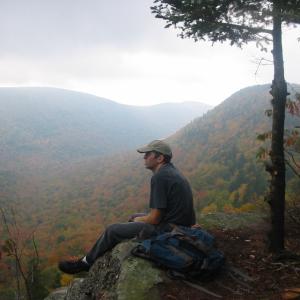
Catskill Mountains. Photo by Daniel Chazin.
Description35 peaks and ridges in the Catskills have elevations of 3,500 feet or more; 19 of them have maintained trails to their summits. Hundreds of miles of trails of all degrees of difficulty.
Facts/Resources

206 miles of trails maintained by 107 Trail Conference volunteers and member groups.

Find descriptions of great hikes in this region: Click here.

Buy a MapCatskill Trails Map Set - Maps for Hiking the Catskills
Buy a BookNew York Walk Book: A companion to the New Jersey Walk Book

North of the more familiar metropolitan hiking areas are the Catskills, where high summits and steep climbs can provide especially rewarding hiking.  The paved roads through the mountains are well populated with hotels, bed-and-breakfast establishments, and private homes, but the higher, more rugged and remote parts of these mountains are unspoiled.  From the summits and other vantage points, the views are magnificent.  To the east, the Hudson River valley is spread out against a backdrop of New England hills, and in all directions lie the fir-topped peaks of the Catskills themselves, with little or no sign of human intrusion.

Thirty-five peaks and ridges in the Catskills have elevations of 3,500 feet or more; 19 of these have maintained trails to their summits; the rest do not.  Hunter and Slide Mountains reach 4,000 feet in elevation.

The Catskill Trails map set can be purchased on this website.  Relevant books available for purchase on this website are Catskill Day Hikes for All SeasonsCatskill Mountain Guide and Catskill Trails.  

The Catskill Park consists of public and private lands where hundreds of miles of trails of all degrees of difficulty invite the hiker to this varied and delightful area.   Overviews of these trails and their environs arranged by geographical subdivisions within the Catskills are here.

  • Descriptions of several specific hikes can be found by linking to "Find a Hike" and scrolling down the "Parks" column to "Catskill Park."

Keep yourself informed about the latest Catskill news and trails opportunitites by visiting the Catskill Trail News and Programs Page.
 

The Catskill Forest Preserve consists of state-owned lands within the "BlueLine" boundary of the Catskills. The Preserve contains numerous wild forests, wilderness areas and campgrounds managed by the New York State Department of Environmental Conservation (DEC).   Selected areas are summarized below with excerpts from their official DEC websites.

  • Balsam Lake Mountain Wild Forest [Trail Conference (TC), Catskill Trails, Map 42] "Located in the southwest corner of the Catskill Park, Balsam Lake Mountain Wild Forest contains more than 13,500 acres of "forever wild" Forest Preserve. With an extensive trail network to several ponds, this wild forest is ideal for hiking, camping, fishing, hunting, backpacking, canoeing and cross-country skiing."
  • Big Indian Wilderness Area [TC Maps 42, 43] "The Big Indian Wilderness Area encompasses over 33,500 acres of ‘Forever Wild' Forest Preserve lands in the heart of the Catskill Park. Wilderness, in contrast to areas where man and his works dominate the landscape, is where the earth and its community of life are untrammeled by man, where man himself is a visitor who does not remain. In fact, the Big Indian Wilderness Area provides the user with the longest stretch of trail through uninterrupted virgin forest in the Catskills, offering numerous opportunities for solitude in a remote and rugged environment."
  • Hunter Mountain Wild Forest [TC Map 41] "Hunter Mountain Wild Forest encompasses almost 11,000 acres in the northeast portion of the Catskill Park. The forest is located in Greene County in the towns of Hunter, Jewett, and Lexington. Hunter Mountain Wild Forest is mountainous. There are six main peaks located within the forest: Hunter Mountain (4,040'), Southwest Hunter (3,740'), Rusk Mountain (3,680'), Evergreen Mountain 3,360'), Pine Island Mountain (3,140'), and Packsaddle Mountain (3,100'). The area is rugged and access is limited. There are several year round and seasonal streams which either flow to the Schoharie in the north or to the Westkill in the south."
  • North/South Lake State Campground [TC Map 40]. "North-South Lake is the biggest and most popular state campground in the Catskill Forest Preserve, offering extraordinary scenic beauty, and historical sites, such as: Alligator Rock, Kaaterskill Falls, and the former site of the Catskill Mountain House. An abrupt change in elevation occurs from about 540 feet above sea level at the base of the escarpment to approximately 2,250 feet at the site of the former Catskill Mountain House. The provinces around the lakes have long provided visitors with exceptional views of the surrounding countryside. It is said that on a clear day, five states can be viewed from the escarpment."
    • Click for a list of other DEC campgrounds within Catskill Preserve , some of which contain trailheads or access to hiking trails.
  • Shandaken Wild Forest [TC Map 42] "The Shandaken Wild Forest is a relatively small unit of land which contains several different parcels offering a variety of recreational opportunities for public use. Total area for the unit is 5375.6 acres, located in the Ulster County town of Shandaken and the southern Greene County town of Lexington."
  • Slide Mountain Wilderness Area: [TC Maps 41, 42, 43]. "The Slide Mountain Wilderness, encompassing over 47,500 acres, is the largest and most popular wilderness area in the Catskills. Extensive foot trails provide access to the remote interior, often climbing over lofty peaks with spectacular views. Slide Mountain, the tallest peak in all of the Catskills, inspired poet and naturalist John Burroughs to write: 'Here the works of man dwindle, in the heart of the southern Catskills.' A plaque commemorating both the man and the mountain graces the face of the summit rock, in tribute to Burroughs and his vision. Aside from the trail system, the Slide Mountain Wilderness offers an expansive trailless area providing visitors with the solitude, challenge and independence commonly associated with wilderness."
  • Westkill Mountain Wilderness Area [TC Maps 41, 42]. "The Westkill Mountain Wilderness Area is a high elevation east-west ridge that lies between the Westkill Creek to the north and the Esopus Creek to the south. Westkill Mountain Wilderness is a remote mountainous location of more than 19,250 acres. The terrain is very steep in places with elevations ranging from 1,000 feet to 3,880 feet. There are five named mountain peaks - Westkill (3,880'), North Dome (3,610'), Sherrill (3,540'), Balsam (3,340'), and Sheridan (2,220'). This area serves as watershed for two New York City water supply reservoirs, the Schoharie and the Ashokan."
  • Willowemoc Wild Forest [TC Map 43]. "Located in the southwest corner of the Catskill Park, Willowemoc Wild Forest contains more than 14,800 acres of Forever Wild Forest Preserve. With an extensive trail network to several ponds, this wild forest is ideal for hiking, camping, fishing, hunting, backpacking, mountain biking, snowmobiling, dog sledding and cross-country skiing."
  • Elm Ridge Wild Forest [TC Map 41]. "The Elm Ridge Wild Forest (WHPWF) consists of 1,355 acres of state Forest Preserve land, and lies at the northernmost edge of the Catskill Forest Preserve in the Greene County Towns of Windham, Durham, and Cairo. The unit contains a 1.5-mile portion of the Escarpment Trail, the 1.1-mile long Elm Ridge Trail, and numerous shorter trails available for multiple uses, including hiking, x-country skiing, and mountain biking. There are two parking areas that serve the unit, one on NYS Route 23 to the northwest and the other at the end of Peck Road to the south. . .  This unit includes a portion of the former Windham High Peak Wild Forest."
  • Forests with no DEC web site:
    • Blackhead Range Wild Forest [TC Map 41]
    • Dry Brook Ridge Wild Forest [TC Map 42]
    • Indian Head Wilderness Area [TC Map 41]
    • Kaaterskill Wild Forest [TC Map 41].
    • Sundown Wild Forest [TC Map 43]

The Department of Environmental Conservation has subdivided the Catskills into two regions.  DEC Region 3 encompasses Ulster and Sullivan counties; DEC Region 4 includes Delaware and Greene counties.

Contact Information:

Comments

This is all the information

This is all the information one could need. Obviously offers a lot to do, so. I better buck up on physical activity to be able to enjoy the hike. Thank you. online pokies